Five new projects have been selected for funding through the WashU–University of Warwick Collaboration Fund, the latest step in strengthening our partnership. The projects span the physical and life sciences, humanities and social sciences, and AI-enabled healthcare education, each pairing complementary expertise from both institutions to tackle complex global challenges with lasting academic, educational, and societal impact.
View the WashU-University of Warwick Collaboration Fund Recipients
Democracy in an age of authoritarianism
Sociology, Arts & Sciences
Sociology, Faculty of Social Sciences
Can democracy find its way through its current crisis, and what will it take to nurture its renewal? This project examines that question by focusing on the role of grassroots institutions and local communities in the United States and United Kingdom. Sociologists Alexander Smith (Warwick) and David Cunningham (WashU) are building a collaboration around shared research interests in grassroots democracy, local institutions, and the legacies of polarization and violence. The project will consolidate a joint research partnership between WashU and the University of Warwick, including a pilot case study in the St. Louis metropolitan area exploring these themes in the American Midwest.
Functional analysis of a zebrafish protein guided by conserved molecular grammars of intrinsically disordered regions
Biomedical Engineering, McKelvey School of Engineering
Warwick Medical School
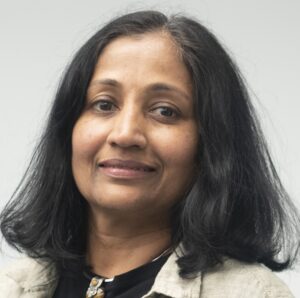
For an egg to develop properly, it needs to build a structure called the Balbiani body, but scientists still don’t fully understand how it forms and functions. This project focuses on a newly discovered protein called Pinchado, which appears essential to that process: when it’s disrupted in zebrafish, it leads to fragmentation of the Balbiani body, defective eggs, and abnormal embryos. By pairing computational modeling and biochemical experiments at WashU (Pappu group) with zebrafish tests of function at Warwick (Sampath group), the researchers hope to uncover how Pinchado’s flexible regions, known in the field as “intrinsically disordered regions”, interact with other egg proteins and what role the regions play in fertility and early development.
Global AI literacy: A WashU Medicine-Warwick Medical School joint framework for biomedical and healthcare education
Institute for Informatics, Data Science and Biostatistics, WashU Medicine

Bioinformatics & Digital Health Services, Warwick Medical School
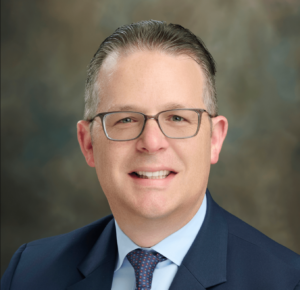
As AI transforms modern healthcare, foundational literacy for clinical and research professionals is essential. Despite rapid adoption, with roughly two in three physicians already using health AI tools in practice, a significant confidence and literacy gap persists: up to 78% of healthcare professionals express concerns about AI’s integration, and less than half feel equipped to evaluate its risks or recognize algorithmic bias. This project adapts WashU’s Center for Health AI (CHAI) AI-Q Foundational Course into a cross-institutional educational framework with the University of Warwick. Led by Drs. Philip Payne (WashU) and Sascha Ott (Warwick), the resulting workshop curriculum demystifies AI, moving it from a “black box” to plain language, traces the history of computing, examines model mechanics (e.g., GPT vs. Claude), addresses data bias, and establishes governance guidelines. The goal is to standardize AI competency across institutions so researchers can safely navigate AI tools, protect data integrity, and promote ethical, unbiased workflows across global healthcare ecosystems.
Topological Anderson criticality
Physics, Arts & Sciences
Department of Physics, Faculty of Science, Engineering and Medicine
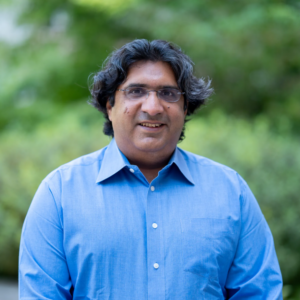
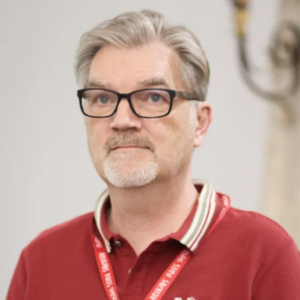
Monolayer amorphous carbon (MAC) is a recently discovered atomically thin material that is a remarkable insulator with an ultralow dielectric constant and record breakdown strength. Its unusual properties have caught the interest of the semiconductor industry, but scientists don’t yet understand why it behaves the way it does. Early evidence suggests MAC’s behavior may be governed by the topology of its atomic bonds rather than random disorder – a potentially more predictable, engineerable property. This project pairs computational modeling (WashU) with mathematical physics (Warwick) to test that idea and whether materials like MAC could be deliberately designed rather than optimized by trial and error.
WashU-Warwick Arts and Humanities Collaborative
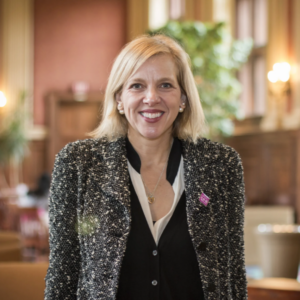
Center for the Humanities & Romance Languages & Literatures, Arts & Sciences
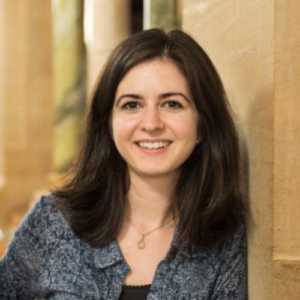
English and Comparative Literary Studies, Faculty of Arts
This project builds on a successful initial collaboration between humanities faculty at WashU and the University of Warwick, structured around three research and education strands. In line with both universities’ commitment to interdisciplinary and international scholarship, this collaboration will draw together scholars from a range of disciplines to engage in interdisciplinary thinking and teaching, cultivate an international outlook, and empower our graduates, while serving as a contact point for faculty in the humanities seeking international collaborators or co-submitting research proposals. The three strands focus on Cultural Memory, Environmental Humanities, and Immersive Theatre and Technology, anchored by an annual Faculty Interdisciplinary Workshop, alongside a new Transatlantic Graduate Network that includes WashU students’ participation in Warwick’s Annual English Postgraduate Symposium.