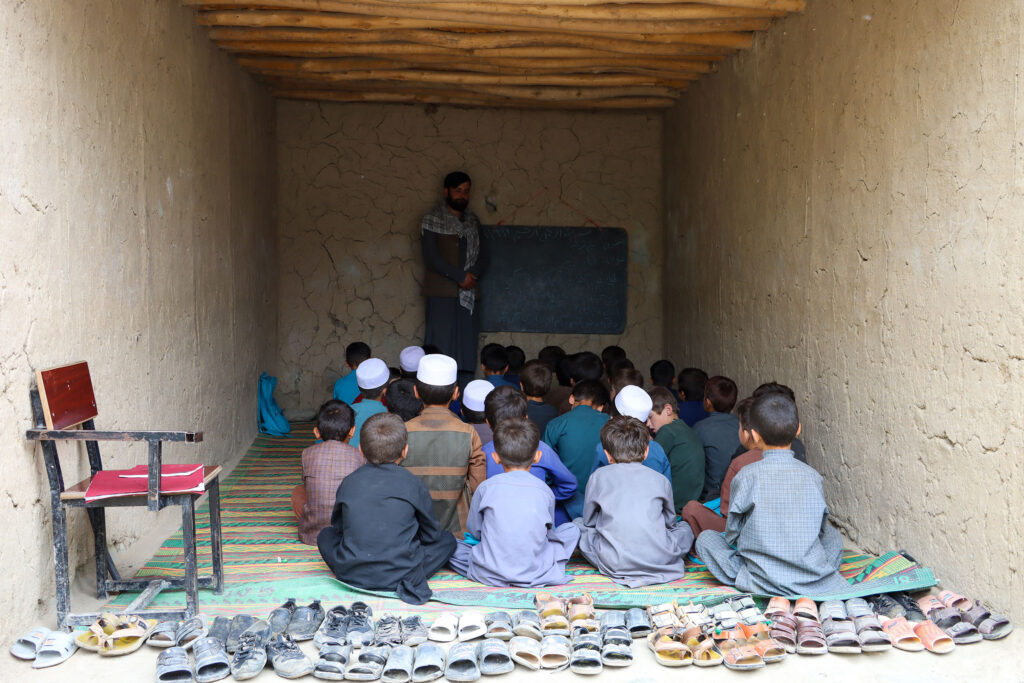
More than four decades of near-continuous war in Afghanistan has left many people in the country impoverished and traumatized. For children to thrive in these circumstances and break the cycle of generational trauma, they need support — but mental health care is limited and stigmatized in Afghanistan, and inaccessible to the vast majority of Afghan children.
With that in mind, Jean-Francois Trani, PhD, a professor at Washington University School of Public Health in St. Louis, and colleagues at the Norwegian Afghanistan Committee, designed, in collaboration with Afghan parents, children and teachers, a school-based intervention for students in third through sixth grade to improve the mental well-being of Afghan children. The intervention, based on a program established to address child mental distress during the COVID-19 pandemic, was culturally adapted for Afghanistan. It involved training teachers and parents on practical ways to help children develop resilience and core life skills such as communication, self-awareness and self-regulation.
Trani and colleagues found that the intervention works, when allowed to work. The program was implemented at 40 schools — involving more than 2,000 students — across Badakhshan, Ghazni and Takhar provinces, with a similar number of schools and students receiving no intervention for comparison. Students at schools that implemented the intervention exhibited better life skills and improved reading and math skills, and a decrease in depression, anxiety, stigma and discrimination — but the benefit was primarily for boys and only at schools that implemented the program within 90 days of when teachers were trained in the intervention, and that experienced minimal disruptions.