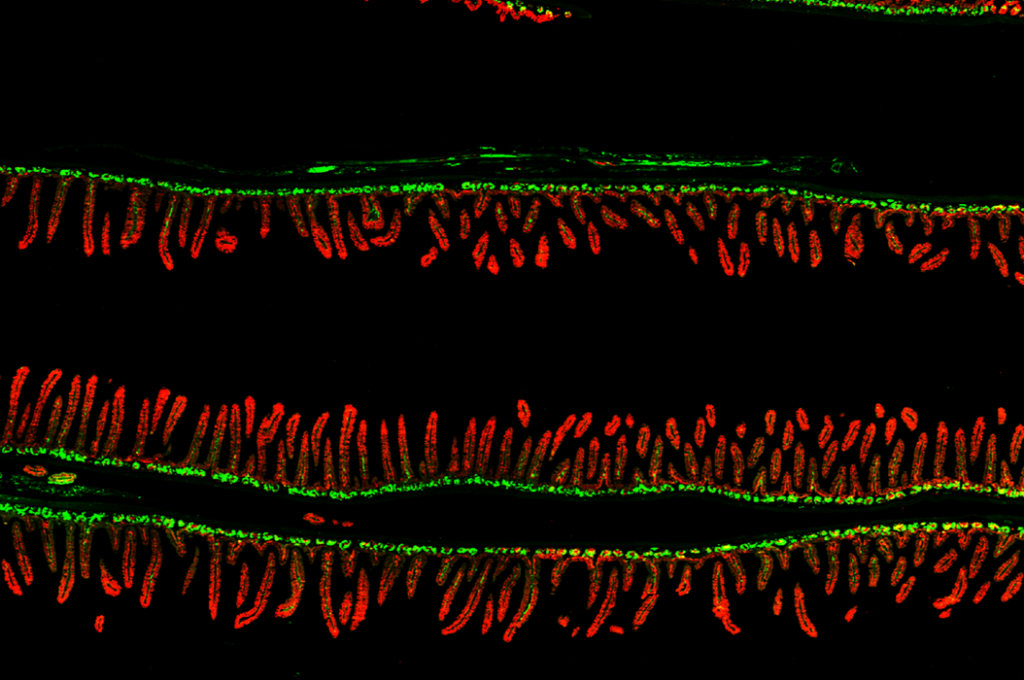
A new study led by researchers at Washington University School of Medicine in St. Louis suggests that an intestinal disorder linked to malnutrition and stunted growth may be transmitted from one generation to the next via the small intestinal microbiome. Analyzing mouse models of the disorder using bacteria cultured from children who themselves suffer from stunting and its detrimental effects, the researchers identified specific bacteria responsible for the inflammatory chemical signals that are characteristic of the disease, which damages the lining of the intestine and impairs nutrient absorption.
Published online in Nature Microbiology, the study provides evidence that mitigating inflammatory bacterial strains and blocking their transmission from mother to baby could serve as future treatment and prevention strategies for the disorder, known as environmental enteric dysfunction.
“The gut microbes in the small intestine make up a largely unexplored ecosystem — a ‘terra incognita’ — because they are difficult to sample. However, this study demonstrates how this ecosystem is important to the healthy growth and development of children,” said senior author Jeffrey I. Gordon, MD, the Dr. Robert J. Glaser Distinguished University Professor at WashU Medicine.