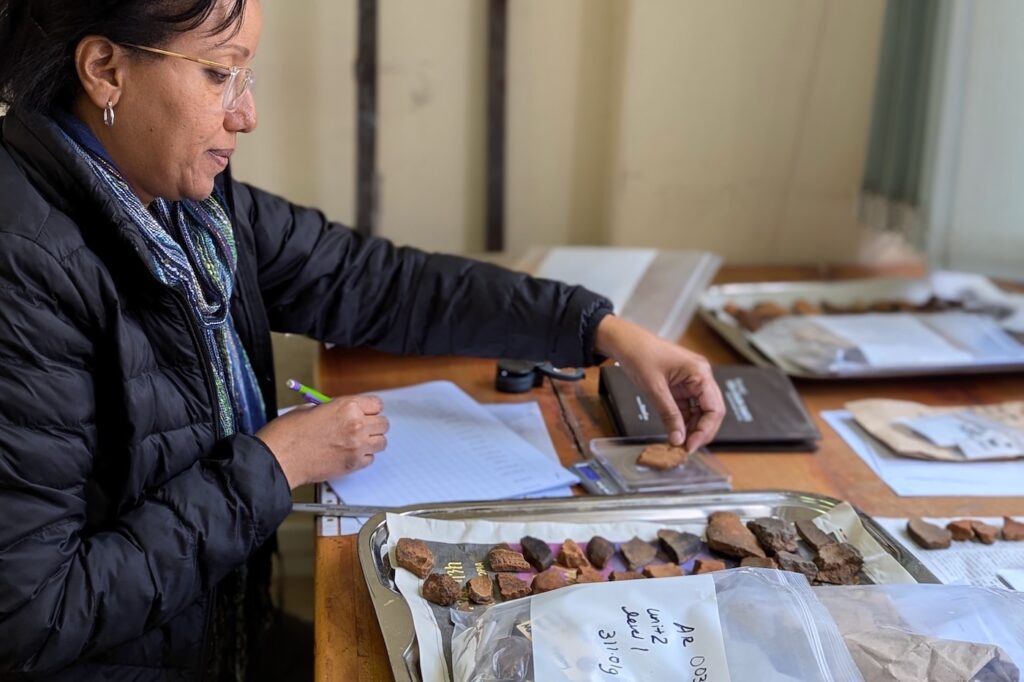
In the verdant mountains of the Kaffa region of Ethiopia, no one can harvest the wild coffee plants without permission.
“They make sure that the wild coffee is protected. Nobody can cut it,” said Helina Woldekiros, an associate professor of archaeology in Arts & Sciences at Washington University in St. Louis.
Kaffa — also sometimes known as Keffa, or the Kafa Zone — is the birthplace of Coffeea arabica, the plant behind your morning cup of joe. Close to 5,000 varieties of wild coffee can be found in Kaffa, a biodiversity hotspot designated a UNESCO Biosphere Reserve in 2010.
Woldekiros was born and raised in Ethiopia but left the country when she started graduate school. She has returned many times for her research. Woldekiros served as a Fulbright Scholar in Ethiopia in 2024, and she has recently established a new study site in Kaffa with support from seed grants from WashU Global and the WashU Center for the Study of Race, Ethnicity & Equity. She is working in the remote mountain highlands of southwestern Ethiopia, in the South West Ethiopia Peoples’ Region, roughly 105 miles from the South Sudan border and about 185 miles southwest of the capital, Addis Ababa.