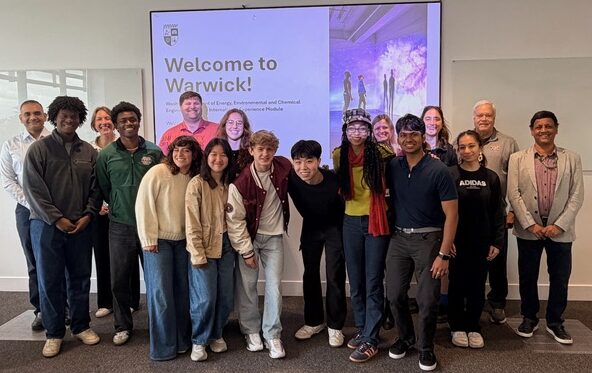
From battery labs to literature and history, WashU engineering students traded the lecture hall for two immersive weeks across the UK. The EECE International Experience module paired hands-on visits to the Warwick Manufacturing Group with tours of GE Vernova, a global energy technology company, and Jaguar Land Rover, the UK’s largest automotive employer, alongside a WashU alumni reception in London and a journey through British heritage.
This May, students from WashU’s Department of Energy, Environmental and Chemical Engineering in the McKelvey School of Engineering swapped their usual classrooms for a two-week international experience module hosted by the University of Warwick. The program was a whirlwind of visits to research labs, industry sites, centuries-old towns, and a fair bit of culture.
The academic itinerary read like a tour through the future of engineering. At the Warwick Manufacturing Group, students met researchers working on intelligent vehicles, additive manufacturing, and precision metrology, then toured the Energy Innovation Centre, a national facility developing next-generation battery technology from raw materials to full-scale production. Sessions with Warwick’s Department of Chemistry and an introduction to the Warwick Open-Source Microscope at Warwick Medical School rounded out a program that stretched across disciplines as much as it did across campuses.
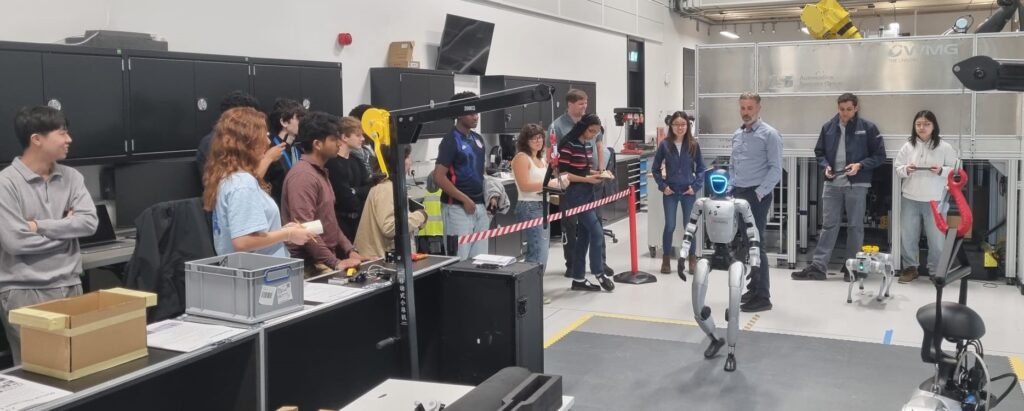
Beyond the lab, students got a front-row seat to how engineering shows up in the real world. A visit to GE Vernova offered a look inside a company reshaping how the world generates and stores clean energy, while a stop at Jaguar Land Rover showed students what world-class manufacturing looks like at scale. A session with Warwick Business School on sustainability and systems thinking tied the threads together, challenging students to reason through the complex, interconnected problems that define modern engineering.
The trip closed with three days in London, capped by a WashU alumni reception at The Shard, Warwick Business School’s central London base, 17 floors above the city. For students, it was a chance to hear firsthand from graduates building careers across the UK; for alumni, a hopeful glimpse at the WashU engineers of tomorrow.
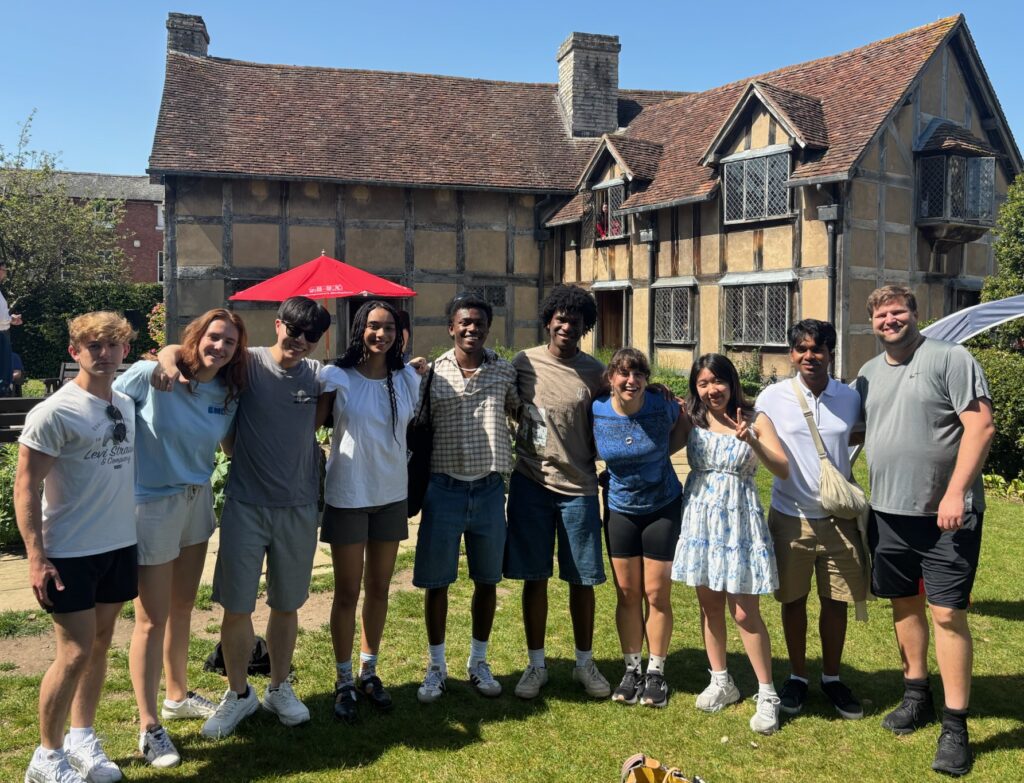
No trip to the UK would be complete without soaking in its history. Students explored the Coventry Transport Museum, home to the world’s fastest cars and a monument to Britain’s industrial past, wandered the colleges of Oxford, and spent a day in Stratford-upon-Avon, including a visit to Shakespeare’s birthplace. Standing in the house where Shakespeare grew up is a reminder that invention isn’t only born in labs; it’s born wherever curious people are willing to look at the world a little differently and think out of the box.
The trip was coordinated by WashU faculty Ray Ehrhard, Kurt Russell and Vijay Ramani. Previous iterations of the program have taken students to Indonesia, India, Singapore, Taiwan, Hungary and Turkey. The program is partially sustained by a gift fund that helps make this opportunity accessible to students regardless of financial means.
“Our strategic partnership with the University of Warwick has been critical to making this experience possible,” said Ramani, the Roma B, and Raymond H. Wittcoff Distinguished University Professor and WashU’s Senior Vice Provost for Graduate Education and International Affairs. “We are deeply grateful to our colleagues at Warwick, especially Mohan Balasubramanian, Sally Delbeke and their team, for curating and hosting such an incredible program for our students. I want to recognize with gratitude Ray Ehrhard, who has co-led this program since 2014. This will be his last trip with students as he eases into retirement, and his years of dedication to this program have left a lasting mark on every student who took part. I am also deeply grateful to Kurt Russell for his splendid stewardship of the program in his inaugural year as co-instructor.”
Read students’ reflections
An itinerary can only tell part of the story. To round it out, we asked three students from this year’s trip to reflect on what stood out most and how the experience shaped their thinking. Here is what they had to say.
Global engineering perspective
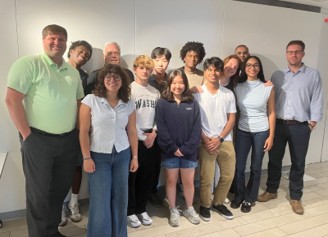
We spent the final days of the program at Warwick Business School London within The Shard, the tallest building in the UK. Our lectures on sustainability and circular economies and the conversations with globally engaged alumni helped consolidate my takeaways from the international experience around circularity, reuse, and resilience.
The demonstration of the carbon fiber reclamation process being developed by the Centre for Polymers and Composites at Warwick revealed how crucial reuse of high-performance materials in manufacturing processes is for circularity. By folding the reclaimed carbon fiber with thermostabilizers and employing traditional weaving techniques they have developed a composite with robust applications in supportive automotive elements.
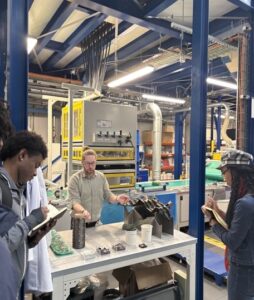
Observing the development and lifecycle analysis of batteries at the Energy Innovation Centre demonstrated crucial safety and longevity challenges in energy storage. An explosive display of thermal runaway in action completely changed how I look at batteries as the worldwide electrification efforts progress. I began to recognize the resilience of products and markets as a key driver of the organizations we visited.
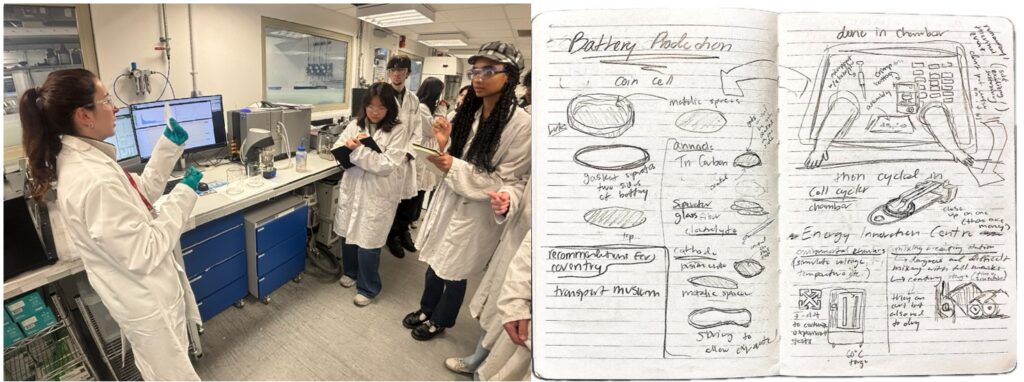
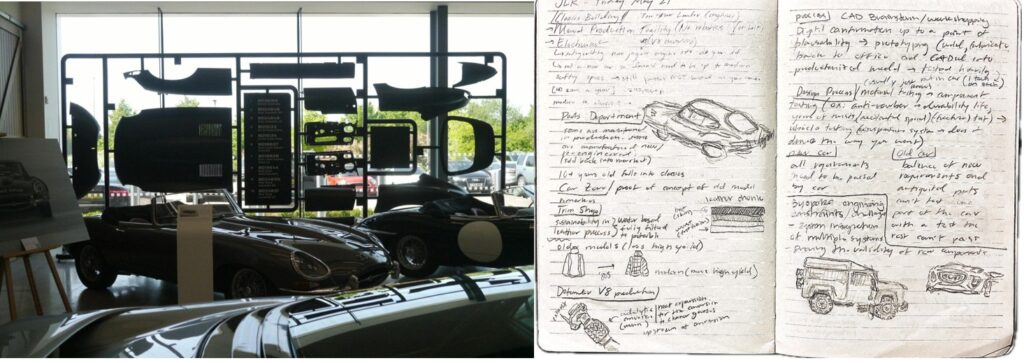
The tour of the Jaguar Land Rover (JLR) Classics offered insight into the role of reclaimed technology in local pride and regional legacy. Retrofitting classic vehicles revitalized their image in popular media and has helped to carry on Coventry’s reputation as the heart of the UK automotive industry. Each repair tells a distinct story. As circularity becomes more prominent, I wonder what narratives and legacies might be woven into the emerging processes.
Personal growth
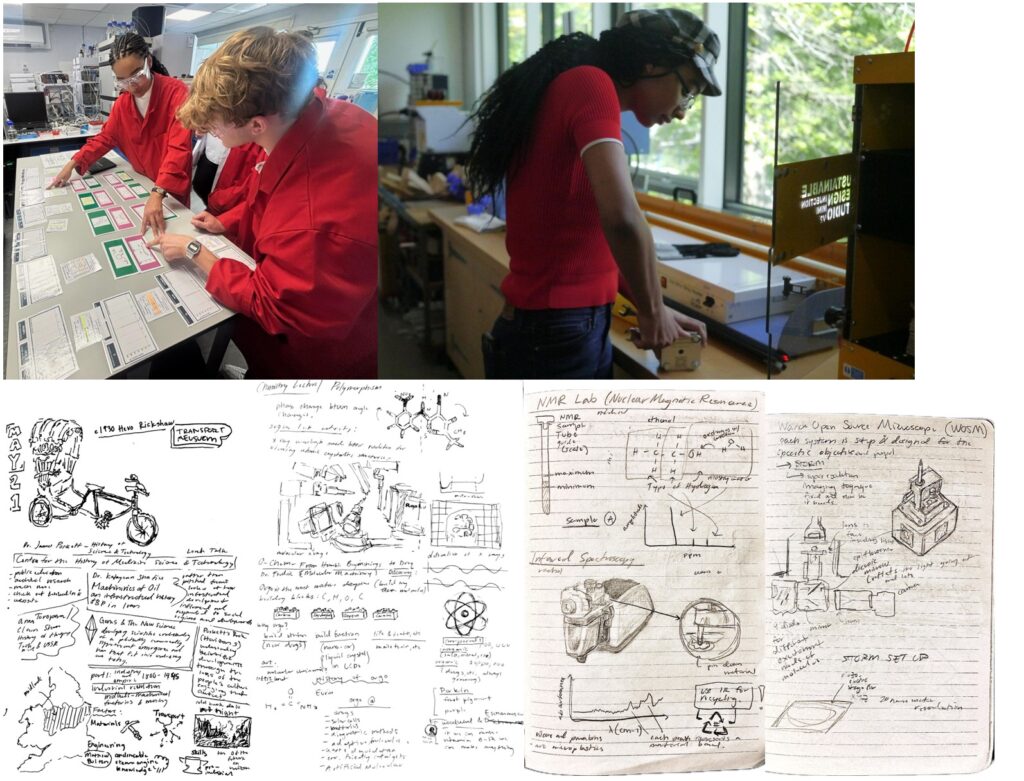
On the heels of junior year filled with textbook heavy coursework, the time zone was far from the only abrupt transition when starting the Warwick summer program. Each day was jam packed with lab tours, industry visits, and university activities. Our sessions were led by passionate experts in their fields rather than teaching professors which, with our cohort of students from all disciplines, made for some rigorous but rewarding discussions. I quickly learned that although my curiosity was boundless, my energy was not and being sick while abroad is no fun. To sustainably maximize the experience, I had to be engaged as part of the group and as an individual. This looked like stepping up when there is a lull in the group things like a molecule identification activity to get the group, even though I haven’t touched spectroscopy sophomore fall gen chem (pictured below). It also looked like taking breaks, as the cohort developed a rhythm of taking the lead and balancing our collective stamina. I remained keen to delve deep when a topic particularly aligned with my interests, choosing the most demanding project of designing and fabricating injection mold pieces during the build space session, for example (pictured below). I began taking detailed visual notes as my meditative way of digesting all the new information and staying ready to chime in. Through the student-guided nature of the course, I developed adaptive learning approaches that were responsive to the dynamic particularities of the sessions, our cohort, and my health will serve me well beyond my upcoming senior year of university.
Cultural experience
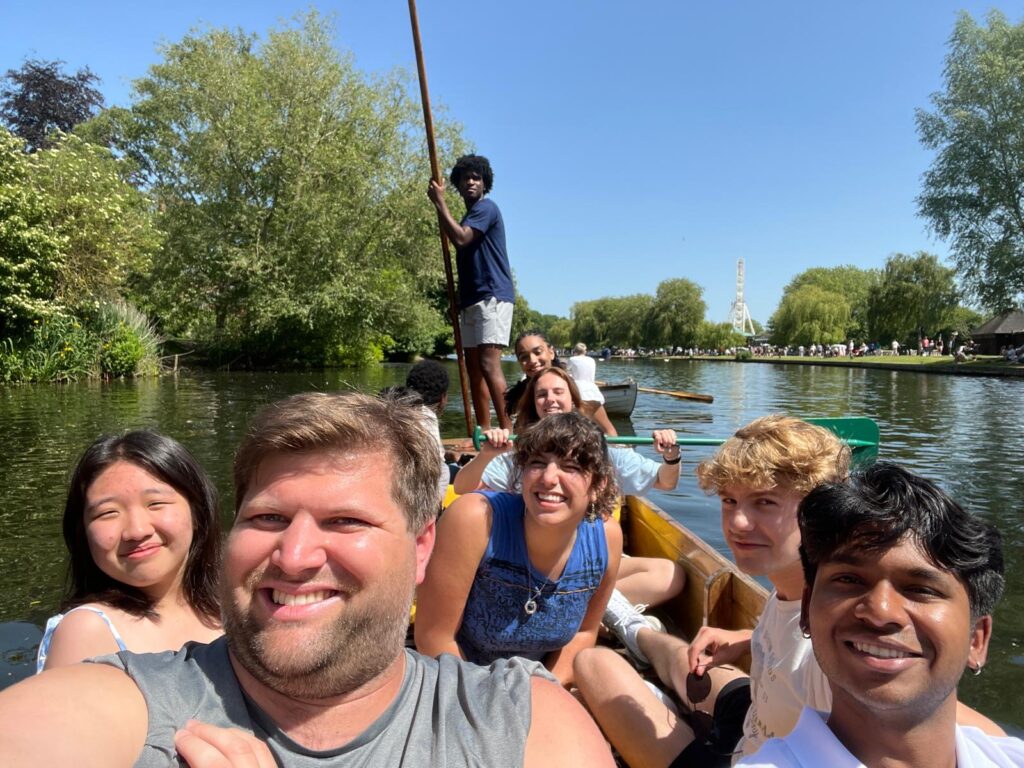
After a weekend of self-guided exploration of the UK, the group reconvened in Stratford-upon-Avon to visit the birthplace of the preeminent English playwright, William Shakespeare. We started with a guided tour of his childhood home. Another student, second majoring in business, noted how William’s father’s glove and leather working business practices and craftsmanship depicted how status is shown through material luxuries and what entrepreneurship looked like at that time. It was certainly fascinating to see not only the craftsmanship and standards of household items and construction of the time, but also all of the complex restoration and conservation engineering that has gone into opening the estate to the public. During our free time the group time we decided to go punting on the river Avon, allowed us to see the waterway infrastructure. It was fun for those of us interested in water engineering to see local hydraulic structures like weirs, locks, and bridges as we drifted along. It was also a great moment to debrief on all we had discovered about the UK during our various weekend trips. Once it was my turn at the helm, I swiftly lost the punt pole in a tussle with the river bank (see below). Naturally, I left the rest of the steering to my crewmates, but it was a blast. Although Stratford was the least technical excursion, engineering students evidently can find design in everything, and it was a lovely way to round out our time in the midlands before heading to London.
Most memorable experience
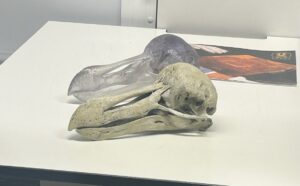
The most memorable experience for me happened in the metrology lab of the Warwick Manufacturing Group when we looked at the CT scan of a fossilized dodo skeleton. Researchers managed to make the skull completely transparent on the computer and, in the process, found a bullet hole inside that was invisible to the naked eye. The exterior of the skull gave absolutely no hint about this feature. The reason why this particular experience stands out was not only because of the impressive image but also the understanding of how much of engineering and science is about creating equipment to look beyond what the human eye can see on the surface. It was an idea that accompanied me during the rest of the trip, from using laser technology to measure hundreds of points in mere seconds to using x-ray diffraction to discover the structure of a molecule that wouldn’t be identifiable otherwise.
Global engineering perspective
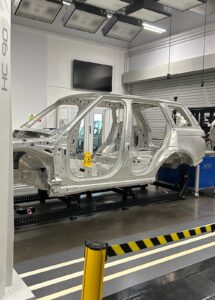
Prior to the trip, I understood engineering as separate disciplines working individually and in isolation from each other. The Warwick Manufacturing Group provided me with a different perspective. During the week, I saw how autonomous vehicles, agricultural robots reducing food waste, a self-propelled submarine, and large-scale batteries’ research are created in the same manufacturing group where people collaborate across disciplines that I wouldn’t consider to be even somewhat related. At Jaguar Land Rover, I could see how this principle works in the case of product lifecycle from a classics restoration shop working with cars that are several decades old right next to the production line that creates new cars. It became evident to me that solving engineering problems, especially global ones such as sustainability and decarbonization, which was mentioned again in the systems thinking session with Warwick Business School, cannot be done with a single discipline involved. Solving such problems requires people to work flexibly across various fields, which is what I want to learn.
Academic impact
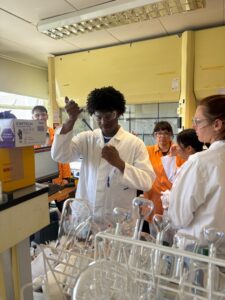
The session with the Department of Chemistry had the greatest impact on me since I have never taken organic chemistry, and I did not expect to understand anything. However, we worked with infrared spectroscopy to determine functional groups and identify a material’s recyclability, NMR to classify liquid based on hydrogen environment, and x-ray diffraction to find the structure of a sugar molecule under a microscope. This academic session impacted me not because of the amount of new information I received but because of the way of presentation. Instructors managed to break down intimidating-looking equipment into something comprehensible that I could understand and explain later. It made me understand that what makes a technical subject difficult is not its complexity but the way it is taught. This experience has changed my perception of how to explain my own engineering work to people outside the field and opened my eyes to how much of business, from client-facing roles to consulting, depends on the same skill: making complex, technical information accessible to people without the background.
Most memorable experience
The most memorable part of the program was visiting Warwick Medical School and using the Warwick Open-Source Microscope to create 3D fluorescence images of mitotic RPE1 cells. Watching cells in such incredible detail was something I had only seen in research papers before, so creating the images myself was an unforgettable experience. It was amazing to see how engineering, biology, chemistry, optics, and software all came together in one system.
This experience meant even more to me because I also work with cultured cells in my research at Washington University. Seeing how engineers designed an affordable, open-source microscope that can support research around the world showed me that great engineering is not only about building advanced technology, but also about making it accessible to more people. It was one of those moments that made me excited about the future of biomedical engineering and the impact it can have on healthcare and scientific discovery.
Global engineering perspective
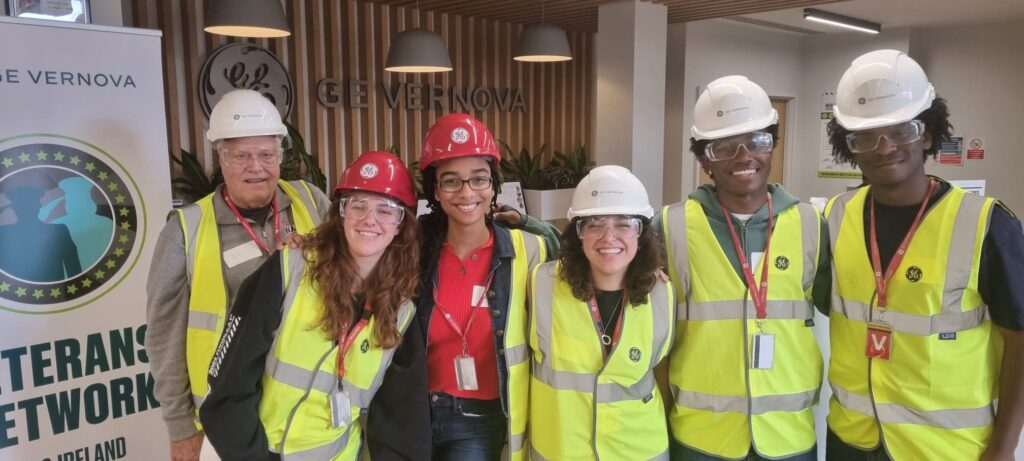
Before this program, I mostly thought about engineering from a technical point of view. During our visits to Warwick, Jaguar Land Rover, GE Vernova, WMG, the Energy Innovation Centre, and several research labs, I realized that engineering is also about collaboration, creativity, and several research labs, I realized that engineering is also about collaboration, creativity, and solving problems from different perspectives. Every organization approached innovation differently, but they all shared the same goal of improving people’s lives through technology. I also enjoyed meeting researchers, students, industry professionals, and WashU alumni in London. Hearing about their different career paths showed me that engineering is a global profession where people from many backgrounds work together to solve complex challenges. The experience reminded me that the best solutions often come from combining ideas across countries, disciplines, and industries.
Academic impact
The entire program changed the way I think about engineering. Instead of seeing biomedical engineering, mechanical engineering, materials science, robotics, manufacturing, and energy as separate fields, I saw how closely they are connected. Whether we were learning about composite materials, autonomous systems, sustainable manufacturing, robotics, or biomedical imaging, every visit showed how different engineering disciplines work together to solve real-world problems.
As a biomedical engineering student, I especially enjoyed seeing how research moves from an idea in a university lab to technology that can improve healthcare and industry. The trip made me even more excited about pursuing a career where I can combine engineering, research, and innovation to develop technologies that make a meaningful difference. It also gave me a much broader understanding of how engineers collaborate across disciplines and across countries to create solutions that have a global impact.