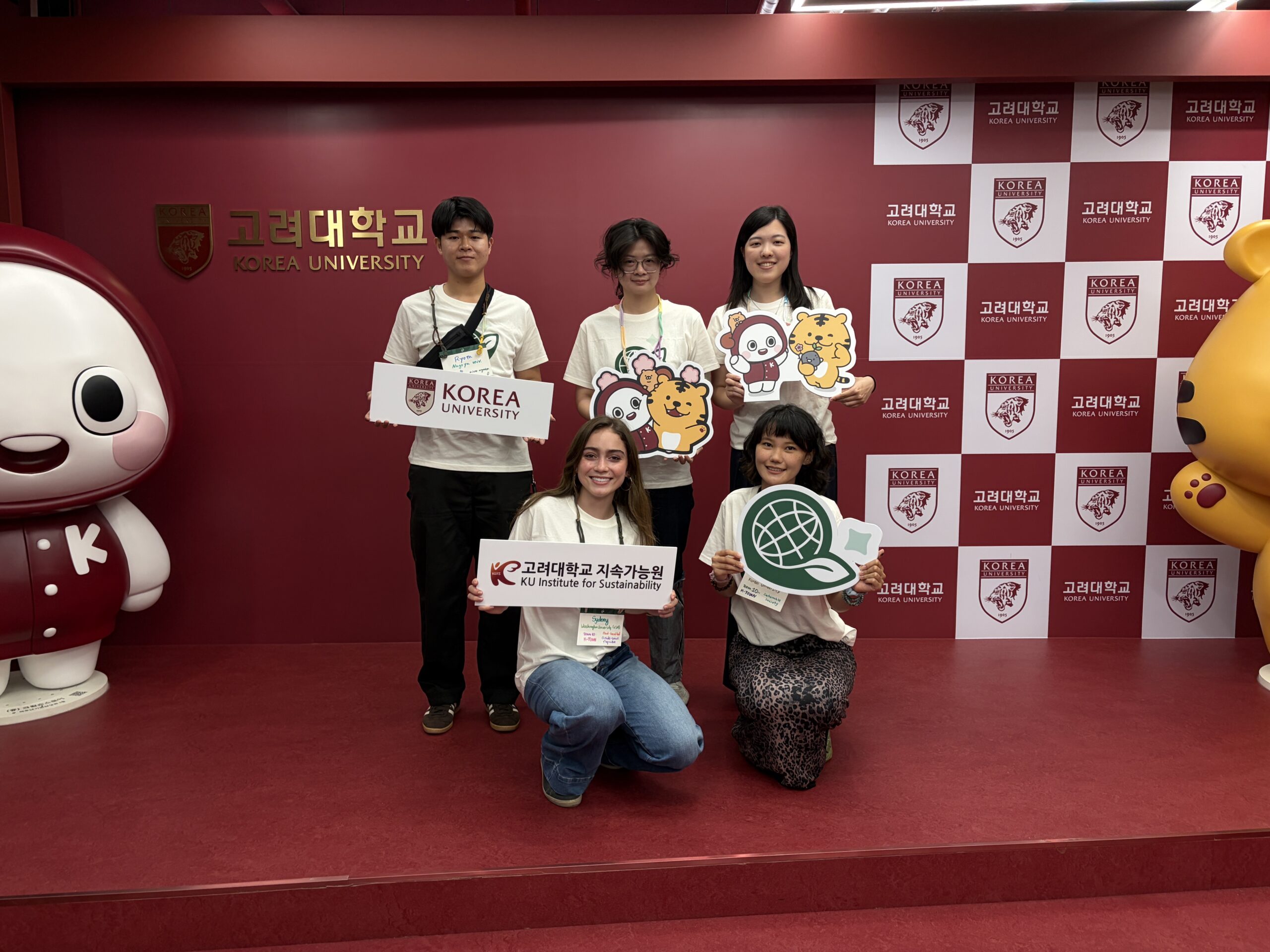
This past summer, three WashU students joined peers from around the world for Korea University’s Climate Corps Summer School, where they designed and pitched solutions to pressing climate challenges.
WashU undergraduates Coco Wu, Sydney Regan and Anthony Vidal Reyes traveled to Seoul for the 2026 program, which brings together peers from universities around the world to tackle climate change across disciplines and borders. They were accompanied by Beth Martin, teaching professor in Environmental Studies in WashU Arts & Sciences, who served as a faculty mentor during the program.
Before arriving in Korea, the students were assigned on interdisciplinary global teams built around the interests they shared in their applications. Teams were organized under three themes: climate technology, climate policy, and climate business and innovation. Each team was challenged to develop a creative, sustainable solution to a problem in its area and pitch it at the end of the program. WashU had a student on a team in each theme.
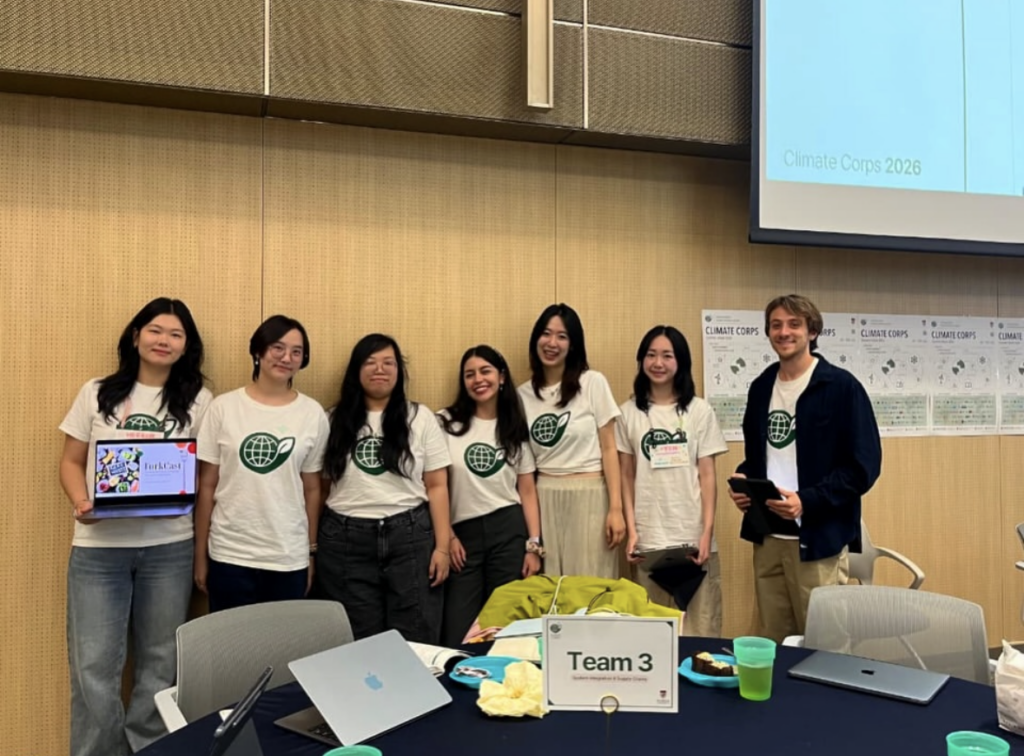
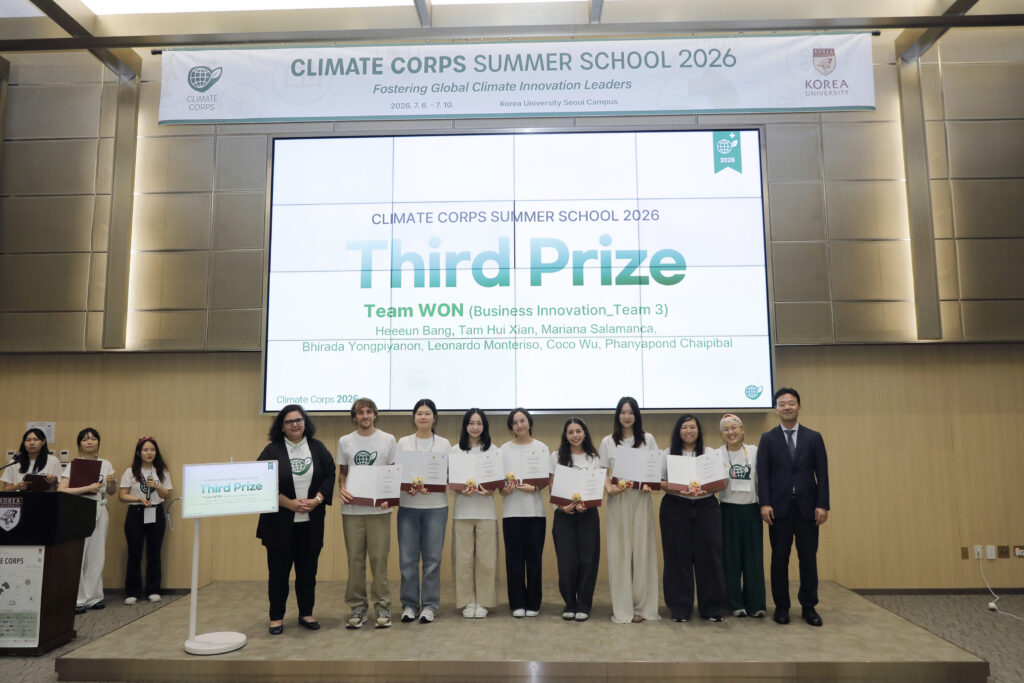
Wu, a design and environmental science major, and her climate business and innovation team developed an AI-powered platform that tackles food waste; her team won third prize. Vidal Reyes, a McKelvey Engineering student and Pathfinder Fellow in Environmental Leadership, and his climate technology team developed a research plan to assess low-impact heat mitigation solutions for homes. Regan, an environmental analysis major, and her climate policy team proposed a Meatless Monday pilot program to reduce meat consumption in school cafeterias.
Faculty mentors from different disciplines and countries played an active role throughout the program. Each gave a three-minute lightning talk on key challenges in their field. Martin spoke about the need for systemic climate education, integration of climate education into existing courses and structures, and information literacy. Faculty also joined for panel discussions and led mentoring sessions with the teams. Martin met with six teams to offer feedback and direction. “I was impressed with their creativity, passion, collaboration and practicality,” she said. “I met with one team several times, and it was rewarding to see their ideas evolving and shifting into a concrete plan.”
For the students, highlights of the program included building international relationships rooted in a shared goal of driving sustainable global growth and learning to collaborate on interdisciplinary, multicultural teams. Martin noted that participation in this program strengthens WashU’s ability to offer the kind of interdisciplinary, cross-cultural training that is at the heart of the Environmental Studies program. The connections have continued beyond Seoul: Martin is pursuing collaborations with colleagues she met, including work with the University of Johannesburg to connect students ahead of the 2027 UN climate meeting in Ethiopia.
This opportunity was made possible with support from WashU’s Arts & Sciences and the Environmental Studies Program along with WashU’s partnership with Korea University.
Read students’ reflections
- Coco Wu, Class of 2027
-
Global Climate Perspective
Before coming to Climate Corps, I defined sustainability as something everyone should participate in to protect the planet, from reducing waste and conserving resources to taking collective action. However, the program broadened my perspective, especially after hearing from Lee-Ann Modley from the University of Johannesburg, who emphasized that while sustainability is important, many African universities are facing a more immediate challenge: hunger. They want to ensure that students have enough to eat before attending class.
This made me realize that sustainability cannot be separated from human needs and social development. Climate action and Climate Corps 2026 are not only about “saving the planet”; they can also be an opportunity to unite people across countries in addressing inequalities, improving food security, and creating a better quality of life. I now see sustainability as a global challenge that requires us to understand different priorities and perspectives rather than assuming that one solution works everywhere and for everyone. Climate Corps really taught me that meaningful climate solutions should not force us to choose between people and the planet; they should find ways to elevate both.
Cross-Cultural Exchange
The interaction that left the biggest impression on me was collaborating with students from different countries and universities. Everyone in the program was highly accomplished at their home university, and everyone came with a genuine passion for sustainability. Because of this, our challenge in developing the final pitch was never a lack of ideas. In fact, we often had too many good ideas. The hardest part was deciding which idea to move forward with as a team.
I realized that collaboration is not simply about bringing talented people together. Each person approached sustainability from a different cultural, academic, and personal background, which influenced what problems they considered most urgent and what solutions they believed would be most effective. Sometimes we disagreed, not because someone was right or wrong, but because we were looking at the same global challenge through different lenses. We had to learn to listen, communicate, compromise, and sometimes let go of our own ideas to create something stronger together.
I still remember when our team received an award. We were probably the loudest group in the room cheering. That excitement was not only because we won, but because we knew how much work we had put in and how difficult the process of getting there had been. After all the discussions, disagreements, compromises, and revisions, the award felt like a celebration of how far we had come together.
That moment made me realize that sustainability requires exactly this kind of collaboration. Climate change is a global challenge, and having diverse perspectives is only the beginning. The real challenge is learning how to understand one another and transform those differences into a shared direction. If we want to solve problems that cross borders, we first have to learn how to work across those borders.
Most Memorable Experience
The most memorable moment during Climate Corps 2026 was not receiving the award, but a personal and deep conversation I had with one of my teammates. Before Climate Corps, I had learned through my Multiparty Decision-Making class that negotiation is not only about understanding someone’s position; it is also important to understand the person behind that position. During Climate Corps, I experienced how meaningful that lesson could be in real life.
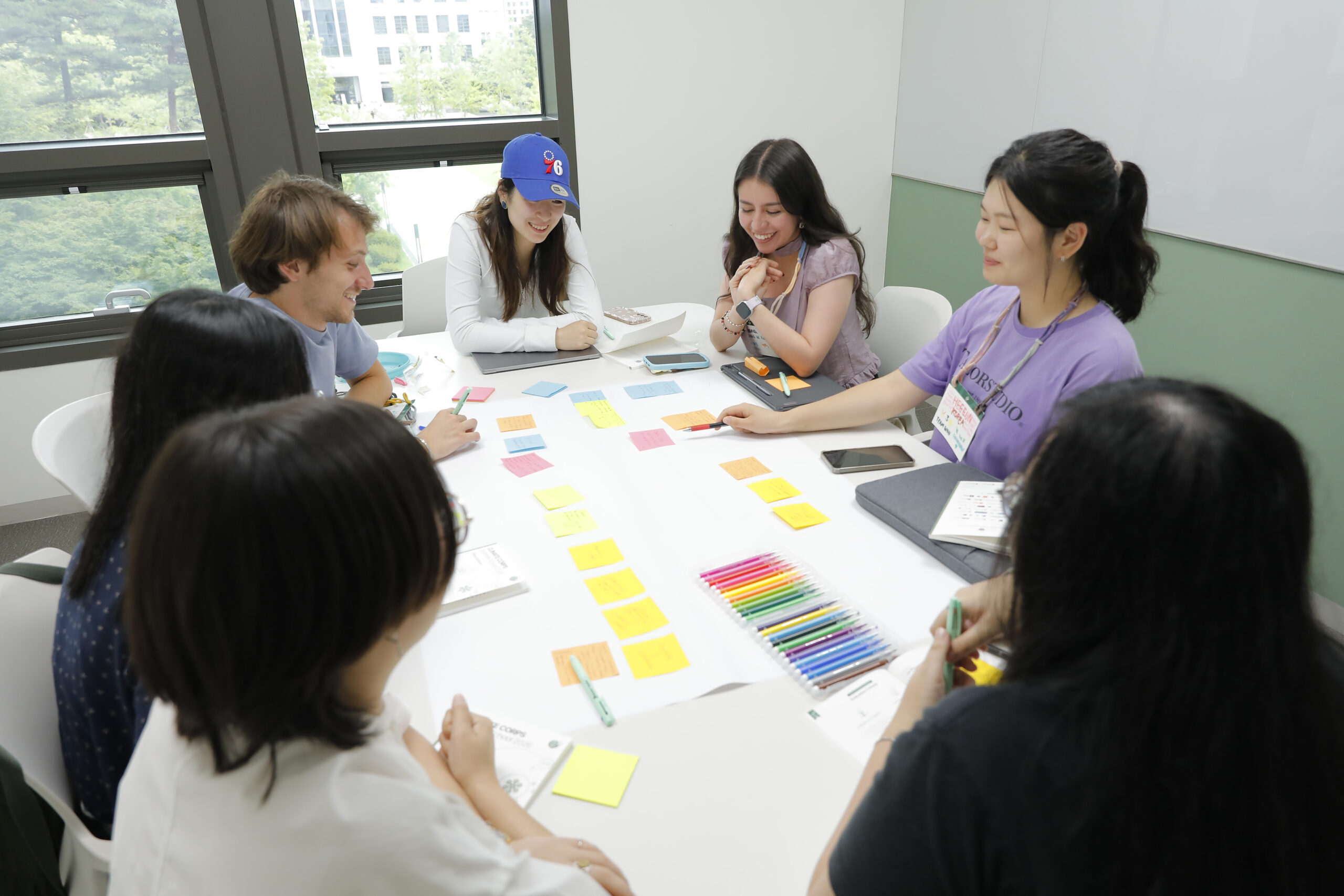
The team had only four days to develop our pitch, so most of our time was focused on brainstorming, building the project, and preparing for the presentation. Because everyone was passionate and had strong opinions, we sometimes struggled to agree on which direction to take. At one point, I felt that one teammate was constantly fighting for her idea, and it was difficult for me to understand why she was so unwilling to let it go.
On the final day after the presentation, however, I had the opportunity to know her more personally. She shared some of her life experiences with me and explained how she had spent much of her life fighting for love, for her education, and to meet her parents’ expectations. Suddenly, I understood her previous behavior differently. Fighting for what she believed in was not simply about winning an argument; it reflected the experiences that had shaped her. That conversation stayed with me because it reminded me that behind every position is a person, and behind every person is a story. In global climate collaboration, understanding those stories can be just as important as understanding the problem itself. Sometimes the first step toward reaching an agreement is not speaking more convincingly but listening more deeply.
- Sydney Regan, Class of 2027
-
Global Climate Perspective
This experience really broadened my perspective on food and sustainability in school environments. I have spent most of 2026 in Australia and am deeply interested in food systems, but it was only while we were developing a Meatless Monday school meal policy at Climate Corps that I started researching Australia’s school food system. I learned that Australia is one of the only high-income countries without a national school lunch program, and I was shocked.
It made me realize how many assumptions I have about school meals around the world. During the development of our policy I got to hear from my teammates from Korea, Taiwan, Japan, and Morocco about what school food looks like for them. I gained a new perspective on how addressing meat consumption, because of its associated environmental degradation and climate change impacts, has to be tailored to different school environments and widely varied attitudes toward meat consumption.
Personal Growth Our team was really diverse in terms of personality types, English-speaking skills, and cultural differences around how acceptable it is to speak up and share your opinions. This made it difficult to collaborate and create an idea that truly felt like it represented everyone’s thoughts.
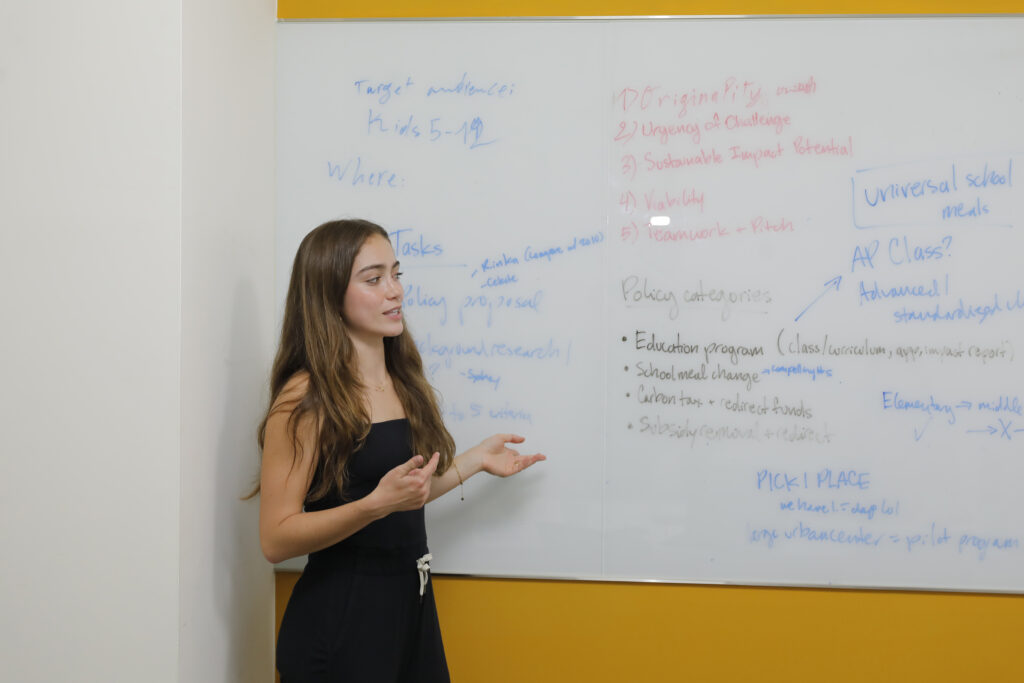
Given our dynamic, I think I really strengthened my ability to facilitate good discussions. I spent a lot of time trying to engage our group members whose voices hadn’t been heard and to identify group dynamics that were unproductive or excluding people’s voices. I thought a lot about how I’ve been told before: good leadership isn’t necessarily about taking up the most space or being the loudest voice in the room. It really involves facilitating better discussions and group dynamics. I got a ton of live practice doing just that, and I think those skills will transfer well into any career I pursue.
Team Challenge & Innovation
We developed a school meal pilot program that would make San Francisco public elementary schools vegetarian one day a week. Meat consumption is one of the largest drivers of deforestation around the world, and it contributes enormously to freshwater withdrawals as well as global greenhouse gas emissions.
To my surprise, our entire team very quickly agreed on developing a meatless school meal policy, and it gave me a lot of hope for talking about difficult but necessary high-impact climate solutions in the food sector. The harder part was getting feedback after our pitch about how controversial our policy was, despite the amount of research we had supporting it. It reminded me that food is an incredibly sensitive topic and that it’s very important to learn how to talk about the cultural, political, environmental, and personal factors that shape what we eat and why.
- Anthony Vidal Reyes, Class of 2027
-
Most Memorable Experience
My most memorable experience of the program was hearing the projects that my peers came up with. The sheer level of creativity and interdisciplinary thinking that other students brought to their ideas was very exciting. Some teams tackled local issues, like the lack of proper proportional indigenous population in New Zealand’s government or supporting fishermen in Senegal. Other teams focused on broad problems, like unsustainable fashion and unsustainable food consumption habits.
What stood out to me the most was the students’ ability to connect problem-solving action across different fields to solve their challenges. I felt very impressed and thankful to be in a room such as this one.
Looking Ahead: Future Career
This experience has had a great impact on my outlook for the future. I always knew that I would want to work within the climate or environmental science fields. However, I had a hard time trying to figure out exactly where I fit.
This opportunity to be face-to-face with dozens of international professionals across many different specialties within this broader field, and to hear about their experiences and the challenges they’re facing, was very eye-opening. After my time at the Korea University Climate Corps, I’ve decided that sustainability must be part of my future career, and I want to do work that directly contributes to creating a more sustainable world.
Cross-Cultural Exchange
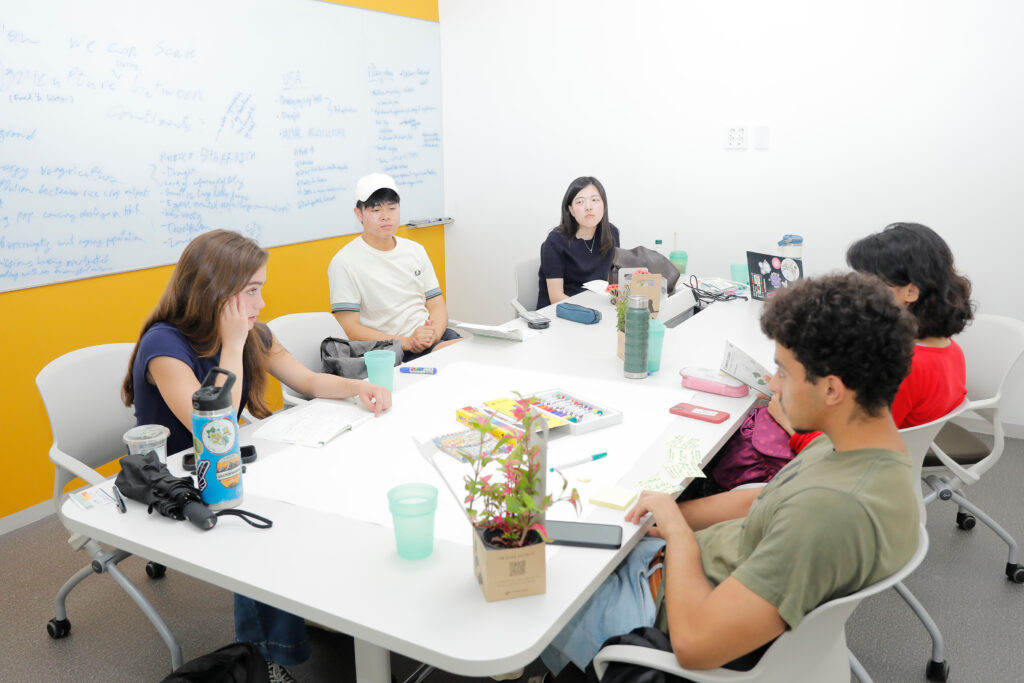
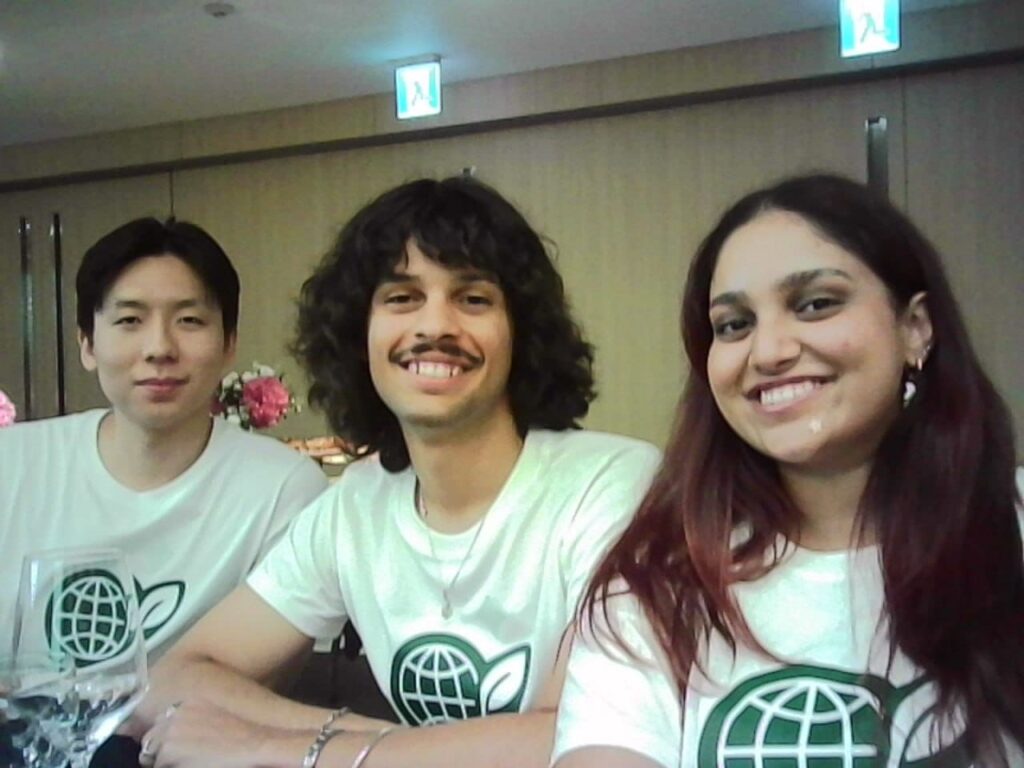
There were many students from across the world in this summer school. In my team there were students from Pakistan, the Maldives, Jordan, South Korea, and the United States. This mix of backgrounds allowed me to hear different perspectives on climate change.
One of the most impactful things that I learned was how diverse perspectives can shape what people consider the biggest climate priority. People from different countries experience climate change and climate change reporting differently and because of that, we sometimes seemed to have different ideas about what constituted objective truth.
On a different note, this program gave me the chance to meet people from countries from which I had never met anyone before. This allowed me to learn about politics, cultures, languages, and ethnicity from different people who were open and curious about me too.
The most impressive thing I experienced was being in that room and knowing that everyone, regardless of nationality, was driven by the same goal: to learn and to work towards a more sustainable future.