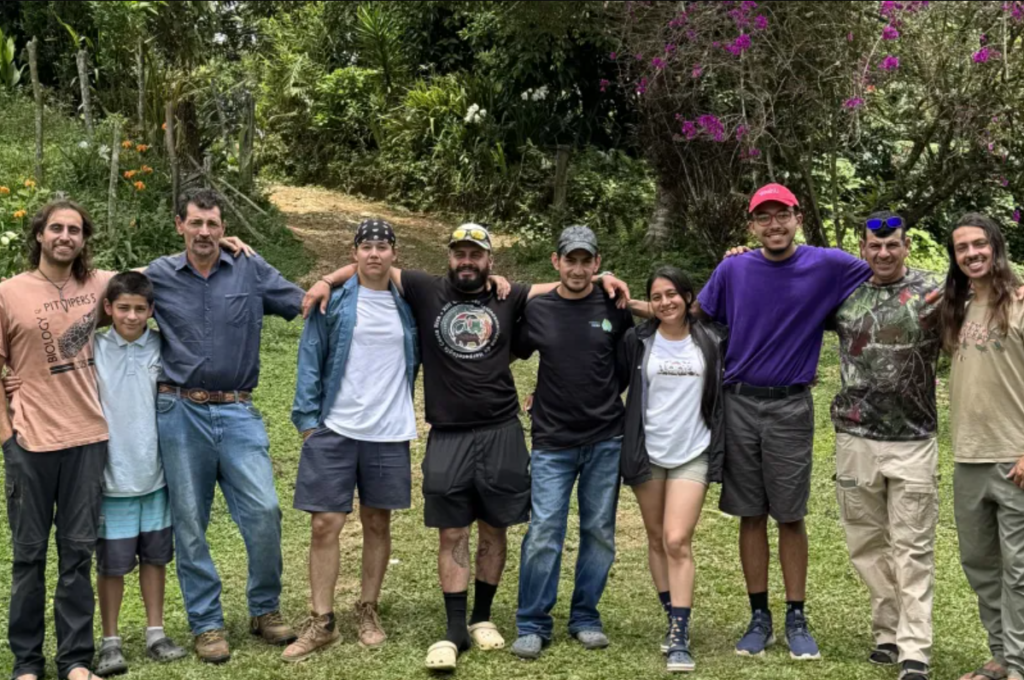
Guided by graduate student Tasman Ezra, a WashU undergraduate turns classroom skills into field research and gains a deeper understanding of what it means to be a scientist.
Before I met Tasman Ezra, a graduate student in the Department of Biology, I never imagined I would someday find myself searching for venomous snakes in a Honduran jungle in the middle of the night. But there we were, outfitted in boots, raincoats, and headlamps as we crept through the thick, wet vegetation looking for rare reptiles and amphibians that cannot be found anywhere else on Earth.
Outside of a class or two, I hadn’t done much scientific research during my first few years at WashU. I’ve always been passionate about both of my majors, biology and statistics. When I discovered the Predicting and Mitigating Human-Snake Conflict in Honduras research project through WashU’s Center for the Environment, I knew it would be a great fit.
With Tasman as a guide and mentor, I’ve learned to combine statistical research with on-the-ground jungle expeditions. For my statistical work, I obtain geographic data for various venomous snake species in Honduras. I then trained machine-learning models with climatic data to predict and map the likely distribution of each snake species. Then, I combine this data with other information, such as hospital locations and population density, to generate risk maps showing where conflict between snakes and humans is most likely to occur. I do this for each venomous snake species reported in Honduras, tweaking my code as needed.